How an Online B. Com Prepares You for Modern Accounting Roles
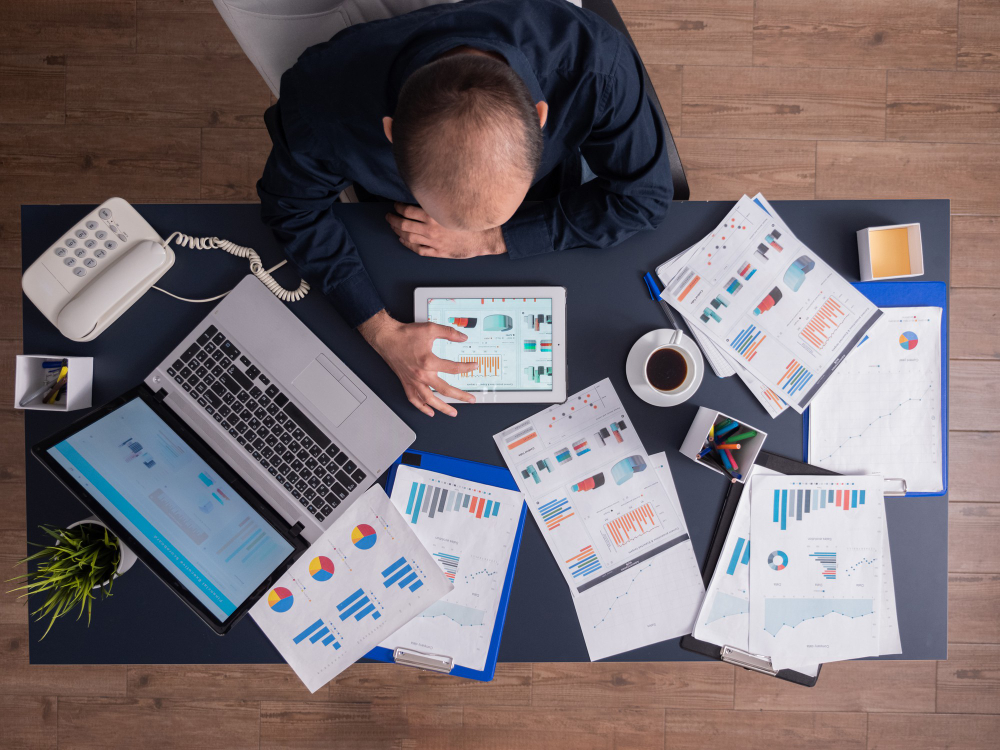
If you’re considering an Online B .Com and wondering whether it can actually prepare you for this shift, you’re asking the right question. Accounting used to mean ledgers, calculators, and a lot of paper. Today, it means dashboards, automated GST filings, and software that reconciles accounts in minutes. If you’re considering a B.Com and wondering whether an online degree can actually prepare you for this shift, you’re asking the right question.
The short answer: a well-structured online B.Com can help prepare you for modern accounting roles by building strong foundations in accounting principles, taxation, financial management and digital business practices. — but only if you understand which parts of the curriculum matter most and how to build on them. This article breaks down exactly how that happens, subject by subject, skill by skill.
What “Modern Accounting” Actually Means Today
Accounting hasn’t stopped being about numbers. It has become more about interpreting numbers correctly and using software to get there faster.
A few shifts define the profession right now:
- GST and digital taxation have replaced most manual tax filing with structured, portal-based compliance.
- Cloud accounting and ERP tools like Tally Prime, Zoho Books, and QuickBooks and other digital accounting platforms are increasingly being used by businesses of different sizes .
- Data analytics is now part of the job. Employers want accountants who can read a trend in a spreadsheet, not just record a transaction.
- Automation handles repetitive entries, so the value has shifted toward review, analysis, and advisory work.
- Regulatory reporting has become more frequent and more digital, from e-invoicing to real-time compliance checks.
None of this makes a commerce degree less relevant. If anything, it raises the bar for what a modern Online B.Com programme should prepare learners for. .
What an Online B.Com Degree Covers
A UGC-DEB approved Online B.Com programme, when offered by a duly entitled higher education institution in accordance with applicable UGC regulations, is designed around core subjects that provide learners with a comprehensive understanding of business, finance and commercial laws. . Typical areas include:
- Financial Accounting
- Cost and Management Accounting
- Business Taxation (Direct and Indirect Tax, including GST)
- Corporate Law and Business Law
- Auditing
- Business Economics
- Business Statistics
- Financial Management
- Entrepreneurship or Business Communication (varies by university)
On paper, this list hasn’t changed much over the years. What has changed is how these subjects are taught and applied — and that’s where the real preparation happens.
Financial Accounting: The Foundation That Never Goes Away
Most modern accounting software in the world still run on double-entry bookkeeping principles. When you learn how a balance sheet balances, why a trial balance matters, and how transactions flow into financial statements, you’re learning the logic that Tally, SAP, and other enterprise resource planning (ERP) systems .
Skip this foundation, and no amount of software training will make sense later.
Taxation: Where Theory Meets Real Compliance Work
GST filing, TDS, and income tax computation are not abstract topics anymore — they’re monthly, sometimes weekly, compliance tasks in real companies. A B.Com program that teaches current tax structures can help learners develop a stronger understanding of practical compliance requirements before entering the workplace .
Cost and Management Accounting: The Analytical Edge
This is where you learn to look beyond “how much did we spend” and start asking “should we have spent it, and on what.” Budgeting, variance analysis, and costing methods are among the key skills that separate a data-entry accountant from someone being considered for a finance analyst role.
Auditing and Business Law: Building Trust and Accuracy
Modern businesses face more scrutiny than ever, from statutory audits to internal compliance checks. Understanding audit procedures and corporate law isn’t just exam material — it’s what keeps you from making costly compliance errors later.
Technology Skills Every Accounting Graduate Needs Now
An Online B. Com provides the academic foundation, while today’s job market also expects graduates to complement that knowledge with practical proficiency in digital accounting tools. . Here’s what typically makes the biggest difference:
- Advanced Excel — pivot tables, VLOOKUP/XLOOKUP, and basic financial modelling
- Tally Prime or similar accounting software — for bookkeeping, inventory, and GST returns
- GST portal navigation — filing returns, reconciling input tax credit
- Basic data visualisation — even simple Power BI or Google Sheets dashboards
- Digital documentation and e-filing systems — since most compliance work has moved online
A well-designed Online B.Com programme should encourage learners to develop these practical skills alongside their academic coursework through projects, assignments, practical exposure and self-directed learning.
Practical tip: Don’t wait for a job to force you into learning Tally or Excel. Most of these tools have free trial versions or free YouTube-based courses. Spend a few hours a week during your degree, and you’ll walk into interviews with skills, not just marks.
Career Paths Open to a B.Com Graduate
| Role | What You’d Actually Do | Typical Entry Point |
| Accounts Executive | Bookkeeping, invoicing, ledger maintenance | Fresh B.Com graduate |
| Tax Associate / GST Executive | Filing returns, reconciliations, compliance | Fresh graduate with tax knowledge |
| Audit Assistant | Supporting statutory and internal audits | Fresh graduate, often at CA firms |
| Accounts Payable/Receivable Analyst | Managing vendor and customer accounts | Fresh to 1-2 years’ experience |
| Financial Analyst (Junior) | Budget tracking, variance reports, MIS | Usually needs Excel/analytics skills |
| Bookkeeper (Freelance/SME) | End-to-end accounting for small businesses | Fresh graduate or freelance route |
Beyond direct employment, a B. Comalso provides a strong academic foundation for pursuing professional qualifications such as CA, CMA, CS — all of which build directly on the accounting and taxation fundamentals you learn in the degree.
Online B.Com vs Offline B.Com for an Accounting Career
Employers evaluating candidates for accounting roles generally consider factors such as the recognition of the qualification, practical skills, and interview performance alongside other job-specific requirements.
Here’s how the two formats actually compare on what matters.
| Factor | Online B. Com | Offline B. Com |
| Degree recognition | Recognised in accordance with applicable UGC regulations, when offered by a duly entitled higher education institution. | UGC recognised |
| Flexibility for working learners | High — study while earning | Low — full-time attendance needed |
| Live faculty interaction | Yes, through scheduled online sessions | Yes, in-person |
| Self-discipline required | Higher | Lower (structured routine) |
| Cost and location flexibility | Often lower, study from anywhere | Fixed campus-based costs |
| Practical exposure | Can be enhanced through internships, projects and self-initiated practical learning. | Sometimes built into campus placements |
For learners planning to begin their higher education journey in the July 2026 admission cycle, choosing a recognised Online B. Com programme that combines academic learning with practical skill development can provide a strong foundation for careers in accounting, taxation and finance.
The honest takeaway: an online B. Com doesn’t disadvantage you in the accounting field, as long as the university is properly accredited and you take ownership of building practical skills alongside the syllabus. The mode of learning is only one aspect of a candidate’s profile. Employers generally place significant emphasis on recognised qualifications, practical skills, relevant experience and overall suitability for the role.
Myths vs Facts About Online Commerce Degrees
Myth: Online degrees aren’t taken seriously by employers.
Fact: When offered by a duly entitled/approved higher education institution in accordance with applicable UGC regulations, an Online B.Com degree is recognised at par with the corresponding conventional programme.
Myth: You can’t build practical accounting skills without classroom labs.
Fact: Most accounting software today, including Tally and GST filing portals, can be learned and practiced from any laptop with internet access. Practical skill-building is more about consistency than location.
Myth: Online B.Com students don’t get exam rigor.
Fact: Reputed online programs may use proctored examinations, the same evaluation standards, and structured live sessions with faculty — not a self-paced free-for-all.
Myth: An online degree limits you to only remote or junior jobs.
Fact: As professionals gain experience, employers increasingly evaluate performance, skills and domain expertise alongside academic qualifications.
Common Mistakes B. Com Students Make
- Treating the degree as the entire preparation. A B.Com gives you the theory; software fluency and practical exposure are on you to build.
- Ignoring GST and taxation updates. Tax rules change often. Students who only study what’s in the textbook fall behind quickly.
- Ignoring Excel until placement season. By then, it’s too late to build real fluency. Start early.
- Not doing any internship or freelance bookkeeping work. Even a few months of hands-on experience, paid or unpaid, changes how confident you sound in interviews.
- Choosing an institution that is not recognised under the applicable regulatory framework to save moneycan create recognition issues later, especially for government jobs or further studies.
How to Get the Most Out of Your Online B. Com
- Make it a habit to actively participate in live sessions whenever possible.. Live sessions are where you get direct access to faculty members/ instructors and can ask the questions a textbook can’t answer.
- Learn one accounting software properly, rather than sampling five superficially. Tally is a safe, widely-used starting point in India.
- Follow GST and tax updates through government portals or reliable finance news sources, not just your syllabus.
- Take on small bookkeeping projects — even for a family business or local shop — to practice real transactions.
- Build an Excel portfolio. A simple budget tracker or expense dashboard you built yourself says more in an interview than a mark sheet alone.
- Plan your professional path early. If CA, CMA, or ACCA interests you, start researching entry requirements while still in your B.Com, so you don’t lose time later.
A Realistic Student Scenario
Consider a student working a part-time job during the day and studying B.Com online in the evenings and weekends. During the taxation module, she starts practicing GST return filing using a demo account. By her final year, she’s not just studying accounting — she has already developed familiarity with GST portal navigation and maintaining basic ledgers in Tally..
When she applies for an Accounts Executive role, the interview isn’t about convincing someone her degree is valid. It’s about showing she can do the job from day one.This illustrates how the flexibility of an Online B.Com can enable learners to build practical skills alongside their academic studies, helping them become better prepared for entry-level accounting roles.
Key Takeaways
- Modern accounting roles require a combination of strong accounting fundamentals and practical proficiency in tools such as Tally, Excel and GST filing systems.
- Core B.Com subjects — financial accounting, taxation, cost accounting, auditing — map directly onto real workplace tasks.
- An Online B.Com offered by a duly entitled/approved higher education institution in accordance with applicable UGC regulations is recognised at par with the corresponding conventional programme.
- Employers generally place significant emphasis on recognised qualifications, practical skills and relevant experience alongside the mode of learning.
- Starting software practice and small real-world projects early gives you a real edge by graduation.
Conclusion
Accounting has changed, but the fundamentals that make someone good at it haven’t. What’s different now is the expectation that graduates walk in already comfortable with digital tools, current tax rules, and basic data analysis. An Online B.Com can help prepare learners for these evolving industry expectations, provided they treat the programme as the beginning of their professional journey and actively build practical skills alongside their academic learning.
If you are planning to begin your higher education journey in the July 2026 admission cycle, explore the UGC-DEB approved ARKA JAIN Online B.Com program. Designed for today’s learners, the programme combines a strong academic foundation with the flexibility of digital learning, helping students build the knowledge and practical understanding required for careers in accounting, taxation and finance.
FAQs
- Is an online B.Com degree valid for accounting jobs in India?
Yes, as long as the university is UGC-DEB approved. Such degrees carry the same recognition as on-campus B.Com degrees for employment and further studies.
- Can I become an accountant with just a B.Com degree?
Yes. Roles like Accounts Executive, Bookkeeper, and Tax Associate typically hire fresh B.Com graduates. For roles like Chartered Accountant, you’ll need to pursue additional professional qualifications like CA alongside or after your degree. - Does an online B.Com teach practical accounting software like Tally?
Most programs cover the accounting principles that software like Tally is built on. Practical software training often needs to be supplemented through electives, certifications, or self-practice, so check your program’s curriculum for specifics. - What is the difference between B.Com and B.Com with a specialization in Accounting?
A general B.Com covers accounting as one of several core subjects alongside law, economics, and taxation. A specialization goes deeper into accounting-specific topics. Both prepare you for entry-level accounting roles. - Is GST taught in a B.Com program?
Yes, GST and indirect taxation are standard parts of most B.Com taxation modules, since they’re core to how Indian businesses currently operate. - Can I pursue CA or CMA after an online B.Com?
Yes. Your B.Com degree fulfils the educational eligibility for pursuing CA, CMA, CS, or ACCA, and having a strong accounting foundation from your degree typically makes these professional courses easier to approach. - How is an online B.Com exam conducted?
Many recognised online B.Com programmes use proctored examinations or other approved assessment mechanisms in accordance with university regulations. - Is online B.Com harder than offline B.Com?
The syllabus and difficulty level are generally the same. What differs is that online learning requires more self-discipline, since you’re managing your own study schedule around live sessions. - What skills should I build alongside my B.Com to get an accounting job faster?
Focus on Excel, Tally or similar accounting software, GST filing basics, and if possible, a short internship or freelance bookkeeping project to show practical experience. - Can working professionals pursue an online B.Com for a career switch into accounting?
Yes, that’s one of the main advantages of the online format. Live sessions are usually scheduled on weekends or evenings, making it possible to study while continuing to work. - Do employers treat online B.Com graduates differently during hiring?
Employers generally evaluate recognised qualifications alongside practical skills, interview performance and relevant experience. - What is the eligibility for an online B.Com program?
The eligibility criteria may vary slightly across universities. Learners should always refer to the official admission page of the respective university for the latest eligibility requirements and admission guidelines. - Is admission open for the Online B.Com programme for the July 2026 session?
ARKA JAIN Online is currently accepting applications for the July 2026 admission cycle for its UGC-DEB approved Online B.Com programme. Prospective learners are encouraged to visit the official admission page for the latest information on eligibility, important dates and the application process.